B&R and Beckhoff both sit at the high-performance end of machine automation. They are not interchangeable clones of a “generic PLC.” Each is a full control philosophy: hardware, fieldbus, motion, HMI, and engineering software designed to work as one system. The right choice depends less on brand loyalty and more on machine architecture, software culture, and how your team will maintain the platform for the next decade.
How to read this This is an Orgenis original for control engineers and OEMs. It is not a vendor scorecard. Product lines evolve; always validate current catalogs, licensing, and support coverage against your specific machine and region.
Pick the platform that matches how your machine thinks — not the one that looks familiar in a brochure.
Architecture: PLC DNA vs IPC DNA
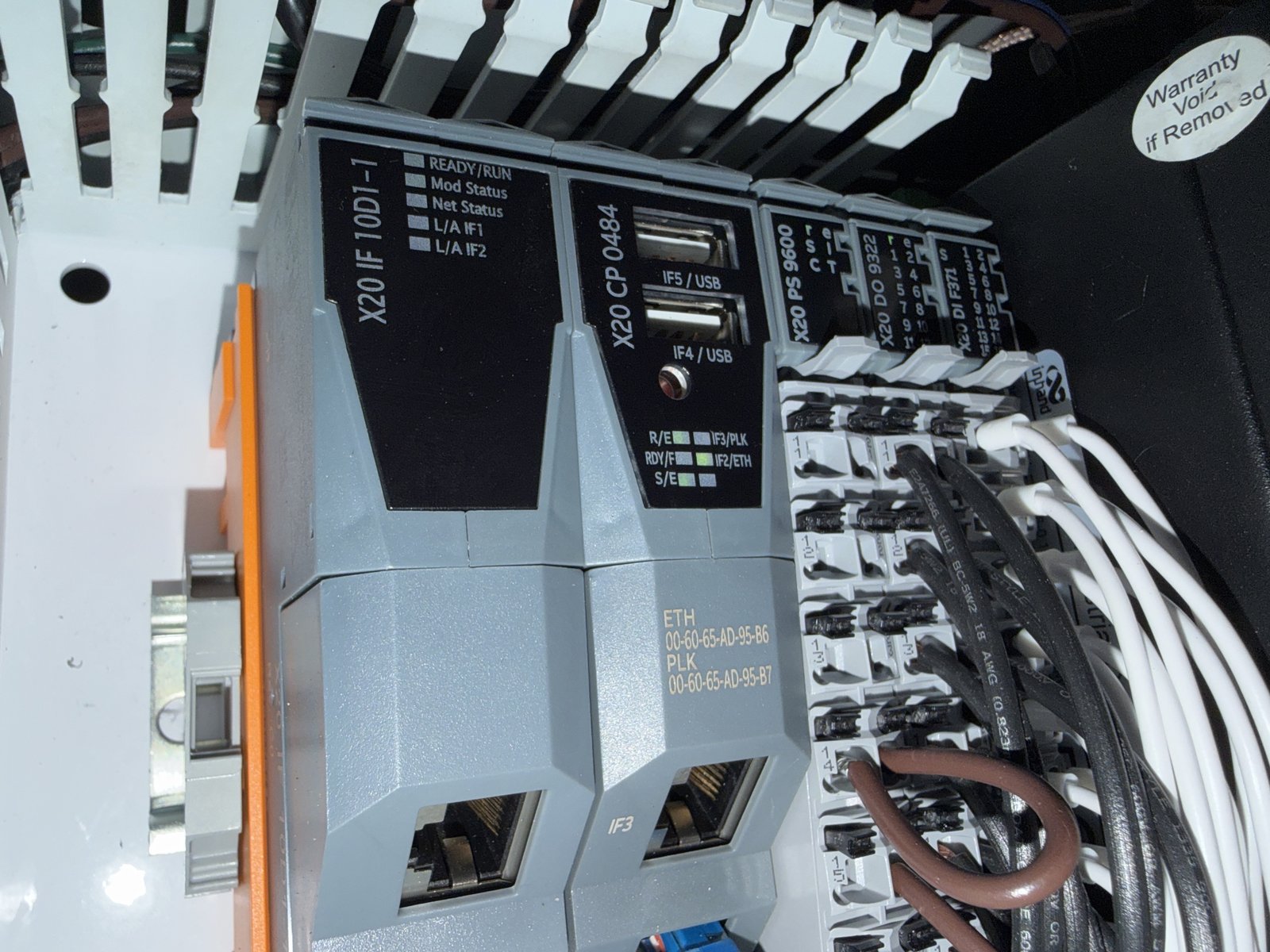
B&R (ABB) grew up as a classic machine automation vendor with a strong PLC and modular I/O tradition. The X20/X90 families, Power Panels, and ACOPOS motion feel like a purpose-built machine controller stack. You can run very capable systems with a clear separation of controller, I/O, drives, and HMI — while still using modern PC-based performance where needed.
Beckhoff is the reference brand for PC-based control. TwinCAT turns an industrial PC (or embedded PC) into the real-time controller. Soft PLC, NC/CNC, safety, and vision can share the same CPU under a deterministic runtime. The architectural bet is: compute is cheap, EtherCAT is fast, and software should absorb complexity that used to live in dedicated hardware boxes.
- Choose B&R leanings when the machine wants a traditional controller + modular I/O narrative, packaged HMIs, and a tightly integrated ABB/B&R machine portfolio.
- Choose Beckhoff leanings when you want IPC headroom, soft modules on one box, and maximum freedom to scale software features without swapping controllers.
Engineering software: Automation Studio vs TwinCAT
Automation Studio is a machine-centric IDE. Configuration, IEC 61131 languages, visualization, motion, and diagnostics live in one project tree. Many OEM teams like the guided hardware configuration and the way machine modules map to software units. The learning curve is real, but the environment rewards structured machine builders who reuse libraries across product families.
TwinCAT 3 (Visual Studio shell) feels closer to a software engineering workstation. IEC 61131, C/C++, MATLAB/Simulink pathways, and a rich set of TwinCAT function modules sit beside Windows tooling habits. Teams with strong software culture often move faster in TwinCAT; teams that think in ladder/structured text machine blocks may feel more at home in Automation Studio.
- Automation Studio strengths: unified machine project model, hardware/software coherence, strong packaged HMI/motion workflows for OEMs.
- TwinCAT strengths: extensibility, multi-language options, modular software products, comfort for engineers already living in Visual Studio ecosystems.
I/O and field wiring reality
Both platforms offer dense, modular remote I/O with slice electronics, analog conditioning, and specialty modules. The decision usually comes down to cabinet density, cable plant strategy, and how much intelligence you push to the I/O level.
B&R’s X20 style modularity is excellent for conventional machine cabinets and distributed stations. Beckhoff’s EtherCAT Terminal (EL/EP) system is extremely granular and pairs naturally with distributed EtherCAT topologies — including IP67 box modules for machine-mounted I/O when the mechanical design allows it.
In practice: if your OEMs already standardize on one I/O form factor across a product line, switching brands is rarely “just a different terminal.” Spares, drawings, and technician habits matter as much as channel density.
Motion and robotics on the machine
Both vendors are serious about coordinated motion — multi-axis synchronization, electronic cams, robotics kinematics, and safety-integrated drive concepts.
B&R / ACOPOS is often favored in packaging, printing, and high-speed discrete machines where cam tables, registration, and mechatronic modules are first-class citizens. The motion story is tightly coupled to Automation Studio’s machine model.
Beckhoff motion (NC, CNC, robotics libraries, and third-party EtherCAT drives) is flexible: many axes, many drive vendors on EtherCAT, and the ability to keep advanced kinematics next to PLC logic on the same IPC. If your machine mixes custom mechanics with open drive selection, Beckhoff’s openness is a strategic advantage.
Networking: POWERLINK vs EtherCAT (and the rest of the plant)
B&R historically champions Ethernet POWERLINK for deterministic machine networks, with broad support for other industrial Ethernet and fieldbuses as needed. Beckhoff’s native language is EtherCAT — widely adopted across vendors for high-speed I/O and drives.
Neither choice is “wrong.” What matters for US plants and OEMs:
- What do your drive and I/O partners already support well?
- How will the machine talk upstream (OPC UA, MQTT, Ethernet/IP gateways, Ignition, plant SCADA)?
- Do you need hard real-time on the machine network, or is “fast enough Ethernet + good engineering” sufficient?
Both ecosystems can expose clean OPC UA interfaces and coexist with Rockwell/Siemens plant layers via careful gateway design. The machine network choice should not trap you — but it will shape vendor lock-in for drives and distributed I/O.
Licensing, ecosystem, and total cost of ownership
List prices rarely tell the story. Compare:
- Controller / IPC cost vs required performance headroom
- Engineering software licensing and runtime options
- Drive + motor packages for your axis count
- Training and spare-parts strategy for service technicians
- Regional support and lead times for your build geography
Beckhoff’s PC-based model can look inexpensive at the controller and then grow with TwinCAT software modules and IPC specs. B&R’s packaged machine approach can look denser up front and then win on reduced integration friction for a standard machine family. Model three years of builds — not one prototype — before you standardize.
When to choose which
| Dimension | Lean B&R | Lean Beckhoff |
|---|---|---|
| Controller style | Machine PLC / modular controller narrative | IPC / soft PLC as the system brain |
| Software culture | Machine-centric Automation Studio projects | VS-oriented TwinCAT + software modules |
| Motion | High-speed packaging / cam-heavy machines | Open EtherCAT drive mixes, heavy software kinematics |
| I/O topology | Classic modular cabinet + machine stations | Fine-grained EtherCAT terminals / IP67 distribution |
| Plant integration | Strong OEM machine package into plant layers | Strong when IT/OT software skills are in-house |
| Standardization bet | One ABB/B&R machine stack across a product line | One TwinCAT/EtherCAT platform with flexible peripherals |
Choose B&R when…
- You are an OEM standardizing a family of discrete machines and want a coherent controller–I/O–motion–HMI kit.
- Your applications lean packaging, converting, printing, or similarly cam/registration-heavy processes.
- Your engineering team prefers a dedicated automation IDE over a Visual Studio-centric workflow.
Choose Beckhoff when…
- You want PC-class compute, soft modules, and room to grow features in software.
- EtherCAT openness (multi-vendor drives/I/O) is a strategic requirement.
- Your team already thinks in software components, libraries, and IPC lifecycle management.
Choose neither as a religion when…
- The plant standard is Rockwell or Siemens and the “machine island” must speak their language cleanly — evaluate gateways, OEM preferences, and long-term support first.
- You are mid-lifecycle on an existing installed base. Migration cost usually dwarfs catalog comparisons.
How Orgenis approaches the decision
We start from the machine and the people who will live with it: cycle time, axis count, safety architecture, HMI expectations, spare strategy, and who will modify the code after handoff. Then we map that to platform strengths — not the other way around.
If you are selecting a platform for a new OEM line, planning a controls refresh, or need a second set of eyes on TwinCAT vs Automation Studio architecture, Orgenis can run a focused controls audit and produce a decision memo your stakeholders can actually use.
Discuss a controls platform decision or plant automation roadmap with Orgenis.